
Payday Loans and Usury

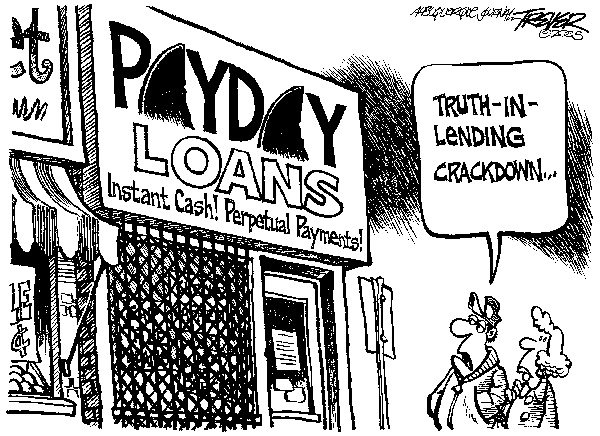
A report out today from R3 finds that millions of Britons take out high-interest payday loans.  These loans, if paid back on pay day, usually charge a low interest rate, but if they are not paid back, the interest rate can go as high as 4,000%!  

In the past, usury laws existed to prevent lenders charging high interest rates.  This was largely based on the Old Testament, where the justification for usury laws was the protection of the poor and vulnerable.   Do we need to revisit such laws?  Or maybe we need to rethink our whole attitude as a society to material things, consumer goods, and debt.  After all, easy access to credit was at the root of the housing bubble and subsequent financial crisis. 
Popular posts from this blog

The CEO: The Rise and Fall of Britain's Captains of Industry

Michael Aldous and I had our book The CEO: The Rise and Fall of Britain's Captains of Industry published a few weeks ago. You can find out more about it and buy it at Cambridge University Press's website . It is also available at Amazon , Waterstones , and Barnes & Noble .  The CEO has already been reviewed in The Sunday Times , The Observer and Financial Times .

The Railway Mania

My colleague and former PhD student Gareth Campbell has created a website about the British Railway Mania - click here . This episode has been described by the Economist as probably the greatest bubble in human history. Gareth's website provides background on the Mania and posits some explanations for the 'bubble'. In his explanation of why the bubble happened, Gareth places a lot of emphasis on investor myopia regarding future dividends and uncalled capital. His study of investors during the episode does not support the view that this episode was fuelled by naive and irrational investors. 

How Valuable Are Connections?

Daron Acemoglu, Simon Johnson, Amir Kermani, James Kwak and Todd Mitton have written a paper on whether firms connected to Timothy Geithner benefited from these connections. They do so by looking at how stocks of these firms reacted to the announcement that he was a nominee for Treasury Secretary in November 2008. They find that there were large abnormal returns for connected firms. Below is the paper's abstract and the full paper is available here . The announcement of Timothy Geithner as nominee for Treasury Secretary in November 2008 produced a cumulative abnormal return for financial firms with which he had a connection. This return was about 6% after the first full day of trading and about 12% after ten trading days. There were subsequently abnormal negative returns for connected firms when news broke that Geithner's confirmation might be derailed by tax issues. Excess returns for connected firms may reflect the perceived impact of relying on the advice of a small ne...