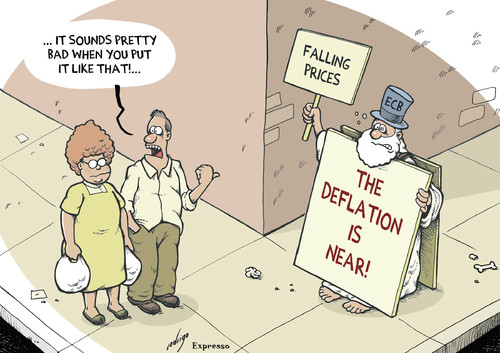
The Eurozone has recently moved into deflationary territory (story here). But is deflation such a bad thing? Deflation has two major consequences. First, it means that debtors have to pay back more in real terms than they borrowed (inflation, on the other hand, helps debtors by reducing the real amount they have to repay on their loan). This, as was the case in the Great Depression of the 1930s, can have detrimental consequences for financial stability. Second, nominal wage rigidity makes it very hard for employers to reduce nominal wages in line with deflation. What does the historical experience with deflation have to say? Click here to read a BIS working paper by Michael Bordo and Andrew Filardo which looks at deflation in a historical perspective. They find that some deflation experiences have been good, other have been bad, and some have even been ugly.